
What Makes a Coworking Space Actually Work
Beanbags and free coffee were never the point. The spaces that actually help people focus share a much quieter set of design decisions.
For a decade, coworking spaces sold themselves on amenities: kombucha taps, ping-pong tables, exposed brick. Almost none of that has anything to do with whether people inside actually get work done. The spaces that hold onto members year over year tend to share a much less photogenic set of decisions.
Zoning, not just floor plan
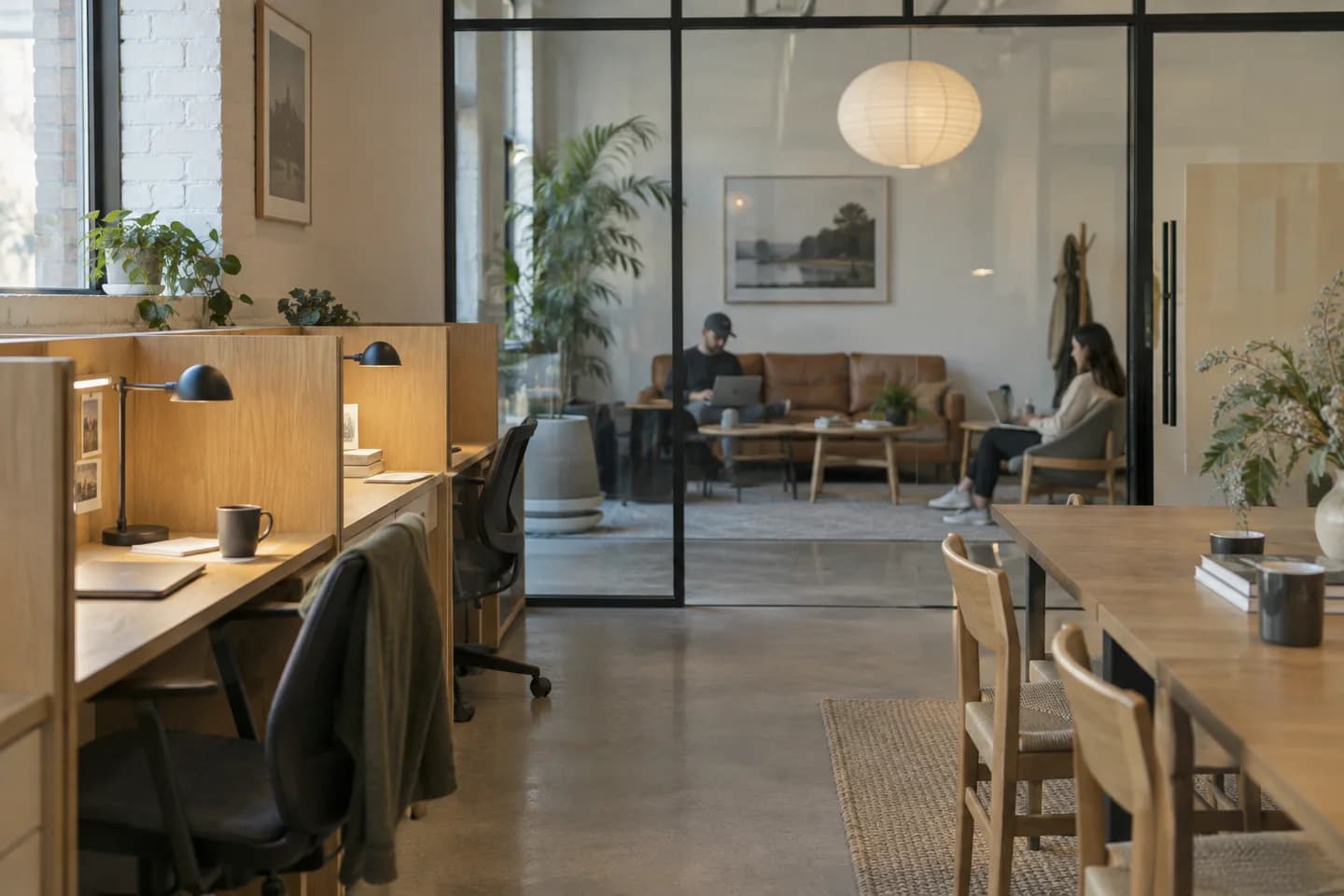
An open floor plan with one type of desk everywhere is a floor plan built for a photo, not for the range of things people actually need to do in a day. The spaces that work distinguish clearly between at least three zones: quiet individual focus areas where silence is the norm and enforced, casual collaborative areas where conversation is expected and fine, and social space that's physically separated from both, so a coffee chat never bleeds into someone's deep work an arm's length away.
The mistake most spaces make is treating "open" as one setting. Open-and-quiet and open-and-social are incompatible in the same square footage, and trying to serve both at once serves neither.
Presence you can actually see
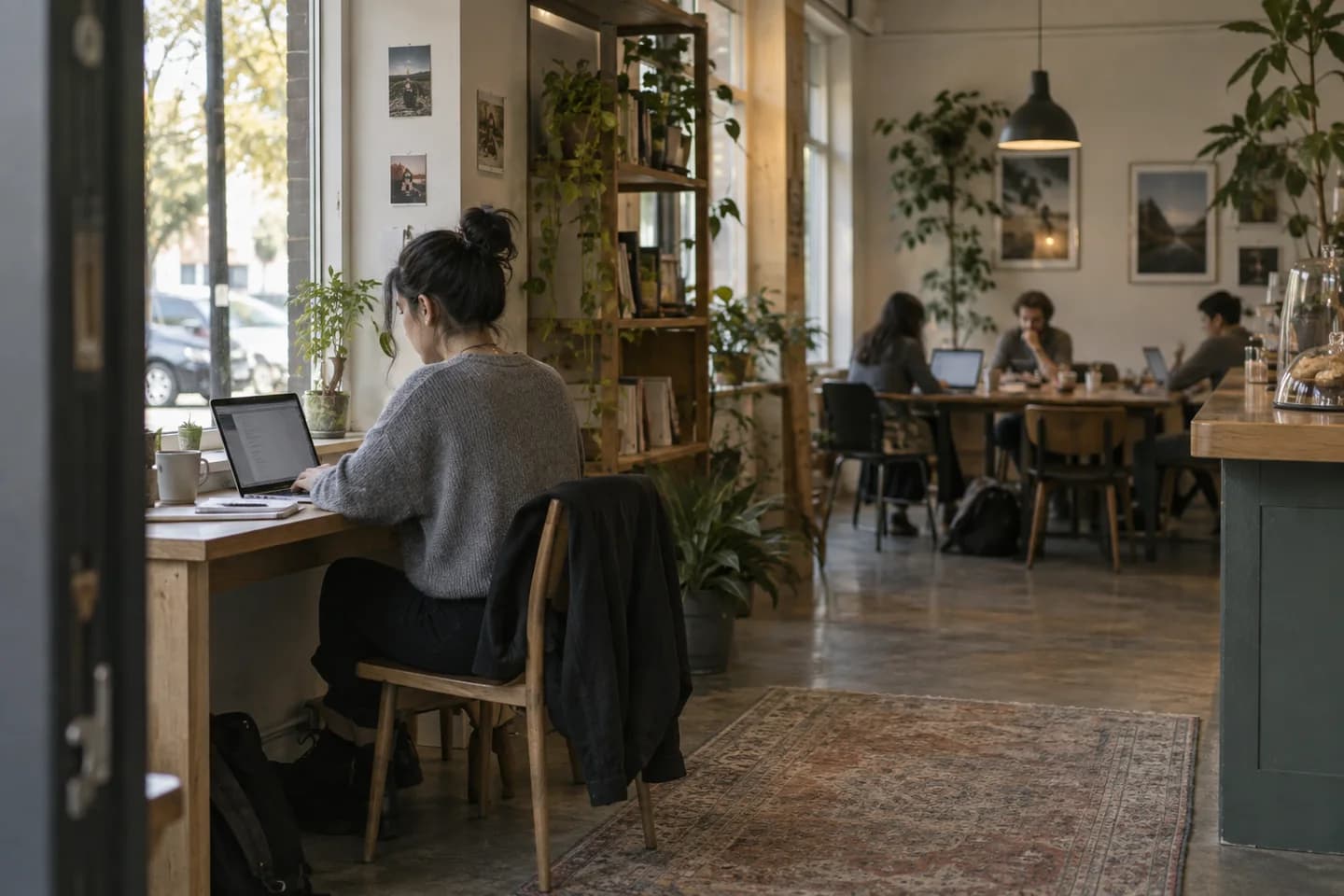
Good coworking spaces make it obvious, at a glance, who's around and roughly what mode they're in — heads-down, available for a chat, mid-call. Not through a badge system or a check-in app nobody uses, but through the physical and social norms of the room itself: certain areas simply mean "don't approach," others mean "approach is fine." This is the exact thing remote tools tend to lose, and the exact thing a good space restores without anyone having to update a status.
Booking friction is a real cost
A desk you have to reserve two days in advance gets used for planned work. A desk you can walk up to and sit down at gets used for the actual moment someone decides they need to focus — which is usually not two days in advance. Spaces with the lowest friction between "I want to focus" and "I am focusing" see the highest return visits, by a wide margin.
The room matters less than who's in it
Ultimately, none of the physical design matters if the room is empty. A gorgeous, thoughtfully zoned space with three people in it at 2pm produces less focus than a plain room that's actually full of people working. Density — enough visible, working people that the room feels alive — does more for actual productivity than any interior design choice. This is the hardest thing for a space to engineer and the first thing members notice when it's missing.
The amenities are marketing. The zoning, the visible presence, the low friction to sit down, and a room that's actually occupied — that's the product. Everything else is decoration around it.