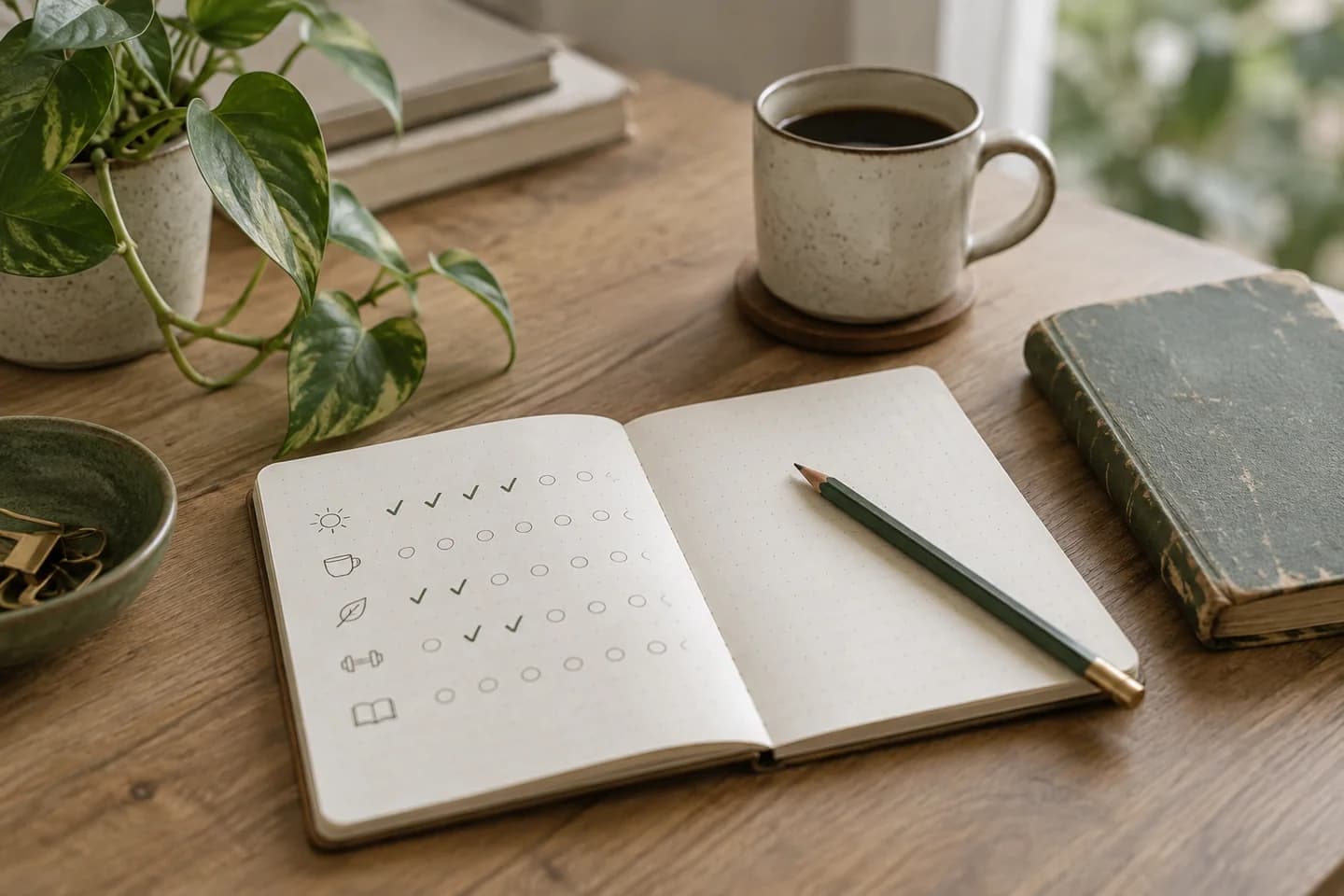

Designing a Morning Focus Ritual
The first twenty minutes of your work day decide more than any productivity app you'll install. Here's how to design them on purpose.

Most people's work day starts by accident. Open the laptop, and whatever loads first — email, a chat app, a browser tab left open from last night — decides what the first twenty minutes actually are. Those twenty minutes matter more than they get credit for, because they usually set the mode for everything that follows: reactive or focused, scattered or deliberate.
A morning focus ritual isn't about waking up earlier or drinking a specific beverage. It's about deciding, in advance, what the first block of the day is for, so that decision isn't being made in the moment by whatever app happens to load fastest.
Decide the night before, not the morning of
The single highest-leverage change is picking tomorrow's first task today. A morning spent deciding what to work on is a morning where the path of least resistance — email, notifications, anything that feels like progress without requiring a real decision — usually wins. Picking the task the night before removes that decision from a moment when you have the least energy to make it well.
Delay input, not output
The instinct in the morning is to catch up: read the news, check messages, see what happened overnight. All of that is input, and input before you've done any real work tends to set the whole day's mode to reactive. A better order is output first — the thing only you can create — and input afterward, once real progress already exists and can't be crowded out.
This doesn't mean ignoring messages all morning forever. It means sequencing: one focused block before you open anything that exists to pull your attention elsewhere.
Make the environment do some of the work
Willpower is a bad way to start a habit and a fine way to maintain one that's already automatic. In the early weeks of a morning ritual, the environment matters more than discipline: a specific room, physical or virtual, that you associate with the first block of the day, so that arriving there is itself most of the decision already made. This is a large part of why "same time, same room" outperforms "whenever I feel ready" — it turns a decision into a habit loop instead of a willpower contest, every single morning.
What a good ritual actually looks like
It doesn't need to be elaborate. A reliable version: pick tomorrow's first task before you close the laptop tonight, sit down at a consistent time and place, do that one task before opening anything reactive, for a fixed block — twenty-five minutes is plenty to start.
The ritual isn't the point. The point is removing every decision you can from the moment you have the least energy to make it well, so the first twenty minutes belong to the work you actually chose, not whatever loaded first.